
Sand flathead restocking program begins at IMAS
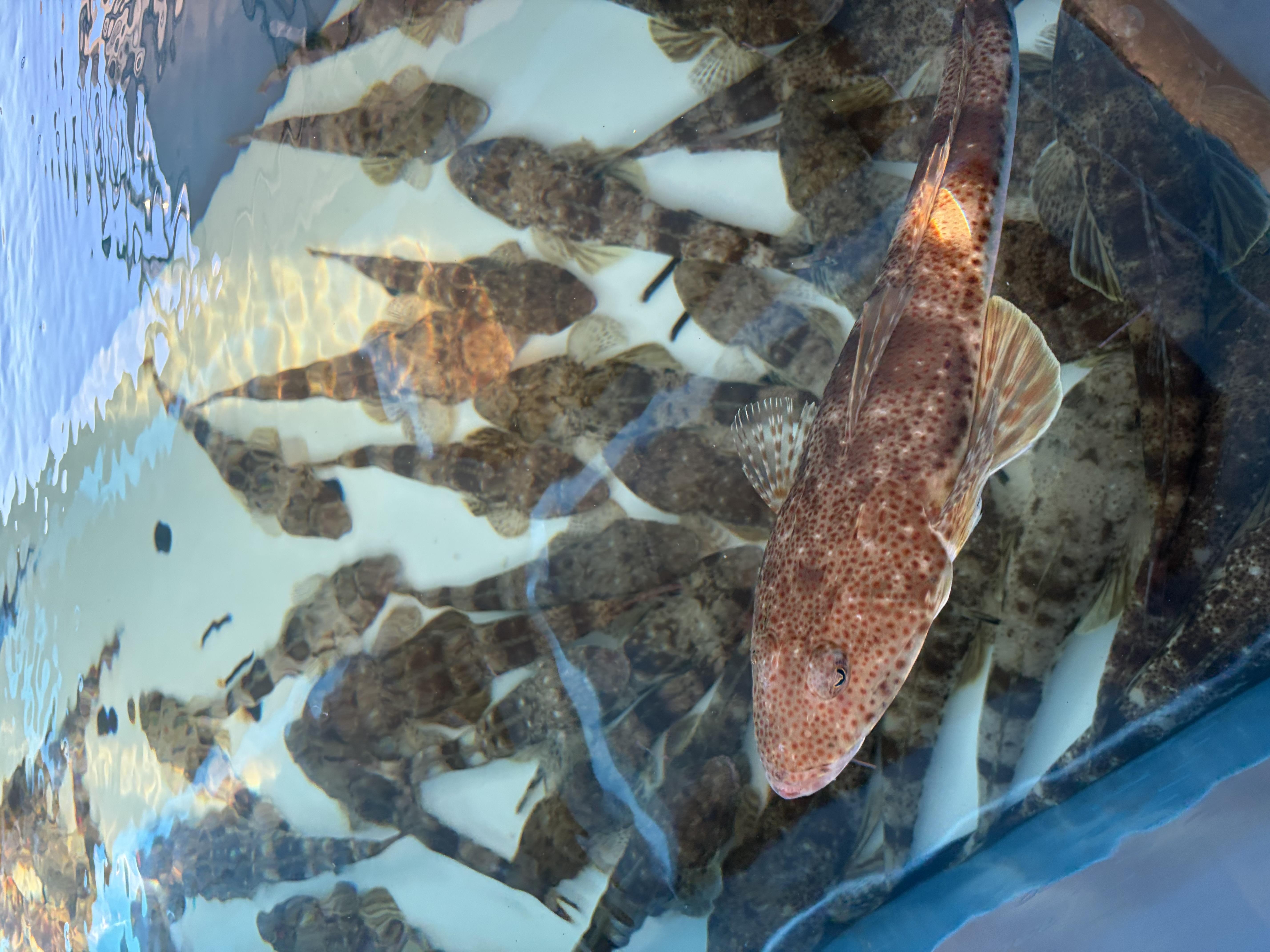
The state government’s $1.2 million sand flathead restocking program has begun.
The South East Sand Flathead Zone between Whale Head and Cape Pillar has been closed since March 1 due to low stock levels.
It is unclear how long it will remain closed, with information on the Fishing Tasmania website saying it “will reopen when data indicate that the size and structure of the sand flathead population in the area can sustainably support fishing again”.
A report has since found that Tasmania’s sand flathead fishery has failed to be properly managed by the state government.
Broodstock has been delivered to the Institute of Marine and Antarctic Science.
Primary Industries and Water Minister Gavin Pearce said it was an important milestone in getting the fishery back to a sustainable footing.
“Earlier this year, we made a tough but necessary decision to ensure our future generations are able to enjoy sand flathead,” Mr Pearce said.
“Implementing a temporary closure of the South East Sand Flathead Zone was not a decision made lightly, but it provides the best chance for this $1.2 million restocking program to get sand flathead back to manageable levels.”
Mr Peare said the program, paired with the zone closure, would accelerate the rebuilding of the fishery.
“We want to see our future generations fishing for Sand Flathead, and that’s why we have acted.
“We’re building an even better Tasmania, ensuring our fisheries are sustainable, well-managed, and looked after for the future.”

Add new comment
Comments
Trawlers
I would like to comment on the current sand flathead fishing closure in and around the Tasman Peninsula. I feel very lucky to have been able to fish and enjoy these waters for over 60 years now, and yes seen some significant changes in a majority of fish species. A lot of kelp beds have disappeared, which were home and safety to fish like bastard trumpeter, silver trevaller, cod, leather jacket and so on.
I guess there are a multitude of reasons for all of these species to have basically disappeared. But in my view, with what I’ve seen in recent years the blame cannot be completely pointed at amateur fishermen. As always with all sporting clubs, there are some that flaunt and ignore the law or rules ruining it for the majority. I also feel fish farms have a hell of a lot to answer for. We are rapidly losing our pristine clear waters to multi national companies, that are concerned about their profits, and obviously couldn’t give a stuff what it’s doing to our water ways and the biodiversity that goes with it.
Tasmania would have to be one of the most beautiful countries in the world, not for our future generations.
There’s also the issue with trawlers, once again a massive money spinner for the companies that run them. They completely destroy the oceans floor, which are breeding grounds for fish like flathead. I hear of so many situations where trawlers are operating of Maria island, Marion bay, etc etc. taking 10 tonnes at a time which goes directly to the Melbourne fish markets.
Prior to the closure amateur fishermen were allowed to catch 5, in some places 2 sand flathead, ranging from 320mm to 400mm, with anything either side had to be returned.
What does a trawlers operator do if he brings up a net with 3000 180mm flathead. One they would be dead, and they certainly don’t get thrown back. Most probably ends up as cat food.
Whilst ever the people supposedly in charge and making executive decisions about our fisheries let this sheer stupidity continue, i feel we have lost from now on and for our future generations. All driven by the mighty greedy dollar.