
'No silver bullet' - deer management consultation moved forward
Consultation on the state government’s wild fallow deer management plan has been moved forward by 12 months as deer numbers continue to rise.
The first stage of consultation on the next Tasmanian Wild Fallow Deer Management Plan is now open and Primary Industries and Water Minister Gavin Pearce said it’s because farmers, hunters and landowners have told him that action needs to be taken now.
“We’ve unlocked more land, given hunters more access, slashed red tape and provided more commercial opportunities for harvesting deer - but despite actions taken to date, the data is clear; deer numbers are going up.
“By bringing the next management plan forward, we can take stronger action to get this under control.
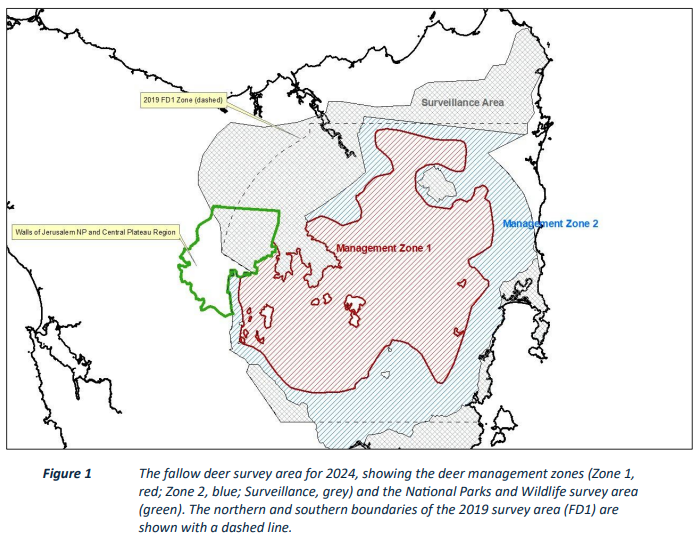
In the Department of Natural Resources and Environment 2019 survey, the estimated deer population for the FD1 survey area (which covers the north, north-east, central highlands and east coast) was 53,660 and in the 2024 survey there was an overall rise in the estimated deer population for this area to 71,655 - a rise of 33.57 percent in five years and equivalent to numbers rising by about six percent each year.
Mr Pearce said that the first step in the process is taking a step back, looking at what has been delivered and getting feedback from the community on what the future should look like.
“Recognising there’s no silver bullet, we want to pull many of the levers in front of us to get this sorted,” he said.
“This includes consulting on the current status of deer, recognising Tasmania is the only state or territory that still gives wild fallow deer protected status on all land, including private land.
“I look forward to hearing the diverse range of views on how we can best bring deer numbers back to a sustainable footing.”
Shooters, Fishers, Farmers Party Member for Lyons Carlo Di Falco MP has welcomed the decision and called for a pragmatic approach that balances the needs of farmers, hunters and the environment.
Mr Di Falco said the government's acknowledgement that deer numbers continue to increase highlights the importance of considering all available management options.
“Deer are an important recreational hunting resource in Tasmania, but we also need to recognise the challenges they can present for farmers, landholders and our natural environment.
“These things don't have to be in conflict. We can support recreational hunting while ensuring landholders have the tools they need to manage deer effectively.”
“We shouldn't be afraid to look at what other states are doing and consider whether some of those approaches could work here.
“We need to be pragmatic. Rather than getting caught up in debates about whether deer should be protected or treated as pests, we should be focused on what actually works on the ground.”
Mr Di Falco said greater access to public land for recreational hunters should be a key consideration in the review.
“We have a large community of responsible hunters who are willing and able to contribute to deer management, yet there are still significant areas of public land where opportunities remain limited,” he said.
“We should be looking at opening up more suitable public land to appropriately licensed recreational hunters, including exploring opportunities on Sustainable Timber Tasmania land.
“Where practical, we should be making use of willing and appropriately licensed hunters before turning to costly alternatives.”
Mr Di Falco also called for greater consideration of opportunities to donate harvested venison to Tasmanians in need.
“If we're serious about managing deer numbers, we should also be looking at how we can make better use of the meat.
“There is an opportunity to explore programs that allow safely harvested and appropriately processed venison to be donated to charities, community organisations and food relief services.
“At a time when so many Tasmanian families are struggling with the cost of living, it makes sense to explore ways we can turn a management challenge into something that benefits the community.
“We should be looking at practical options that reduce waste, support people in need and recognise the value of deer as a food resource.”
Mr Di Falco encouraged farmers, hunters, landholders and regional communities to have their say during the consultation period.
The consultation includes a discussion paper, online survey and opportunity to make a written submission.
Consultation is open until 5pm on Thursday, 26 November 2026.
The discussion paper, online survey and information on how to make a submission are available at https://nre.tas.gov.au/deer-plan
Stakeholders who have participated in previous deer management consultations can provide new feedback or advise that their earlier submissions remain relevant to the current review.

Add new comment
Comments
Deer Management
As a hunter with 36 years experience, I’d say the next step must clearly be to remove any and all barriers to shooting deer. A lot of hunters have been asking for that for years but found themselves unfairly painted with the wrong brush and labelled to be supporting no change! It’s one thing to say that permit types have been reduced etc but for shooters in Zone 1, the predicament of needing to hassle farmers for tags etc still exists and impedes the impact of hunters on those properties if they can’t access the tags at any given time and can only antlerless deer etc. The affixing of a tag actually now serves no logical purpose and so it just needs to go. The whole system should just be managed by hunting licence (including all reporting). No work for the farmer so he can get on with farm business and just leave it all to the shooters to do. Now that’s what red tape reduction really looks like but it’s strange in that history says when you talk red tape reduction and deer in the same sentence, things just get worse not better. Alternatively after all these years, just deregulate deer and everyone can then stop talking about it and spend more time on the rifle doing something constructive about it. Finally, don’t listen to the academics who would do well spending some time out observing shooting and the real world challenges of reducing deer numbers on large holdings. The more shooting you do on deer, the harder the job becomes but the efforts of hunters who actually do this work shouldn’t be devalued.